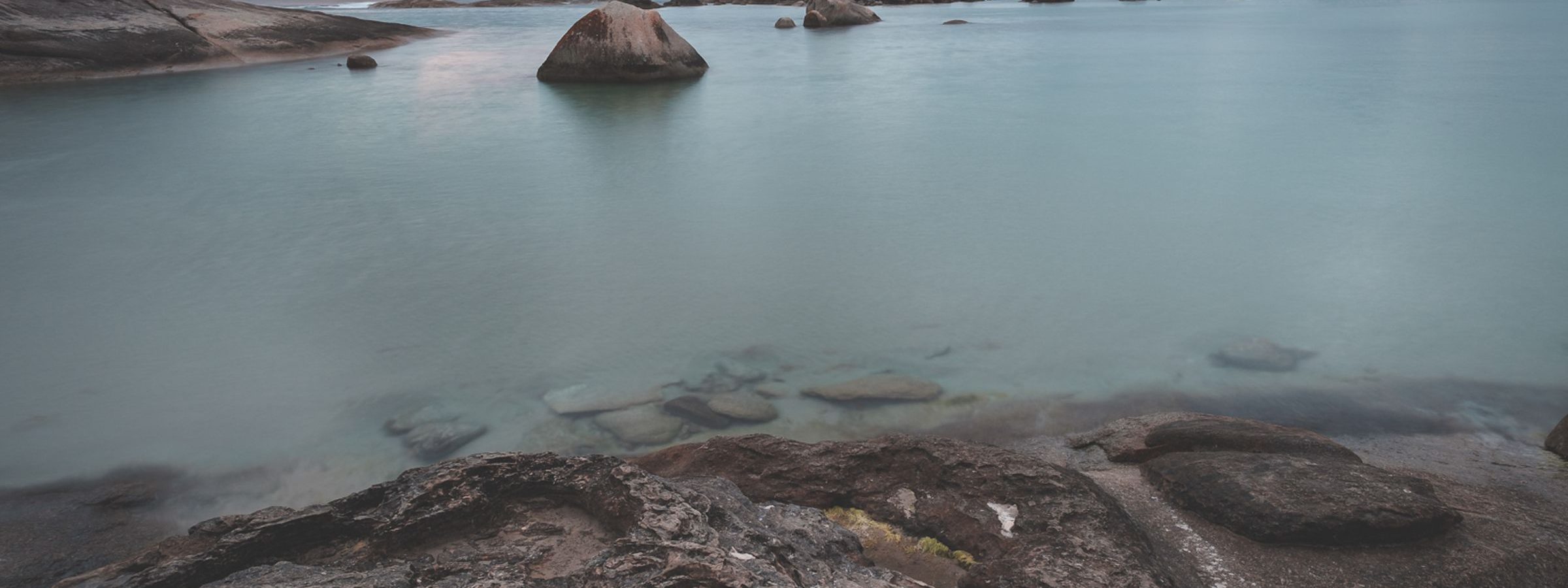
The coast is clear, and the job is not done
Two men with standing said different things about the same water on the same day in April. A premier was talking about beaches. A research director was talking about stocks. Both were right, and the gap between them is where the money is.
The unit
At the height of it South Australia was weighing the damage in kilograms of dead animals collected off its beaches per week. About 9,500 of them, every week, hauled off the sand by people with gloves and bags.
By the end of April the figure was under 50.
That is a real recovery and it is also a strange number to be governed by. Nobody designs a monitoring program around the mass of what washes up, because the mass of what washes up is a function of wind and tide and how many volunteers turned out on Saturday. It became the headline number because it was the one thing a person could see. The bloom had been running in Gulf St Vincent and Spencer Gulf since March 2025.
Collection weights as reported by ABC News, 27 April 2026.
Two right answers
On 27 April the Premier of South Australia, Peter Malinauskas, said the coast was effectively clear, and that the bloom had essentially cleared up. On the same day Professor Mike Steer, who runs the state's research and development institute, said the job was not done.
Neither man was spinning. A premier answers for beaches, and the beaches were clean. A research director answers for stocks, and the stocks had not come back. What had ended was the visible part.
A premier answers for beaches. A research director answers for stocks.
Both quoted by ABC News, 27 April 2026.
What stayed shut
From 1 May, southern calamari closed across both gulfs. Commercial, recreational and charter, all of it, after stock assessments found severe declines. The closure notice itself sits behind a page that answers every request with a refusal, so what is on the record here is an outlet's report of it rather than the instrument.
Oysters and mussels had already been shut for as long as eight months. That is the part of a bloom that outlives the bloom, and the mechanism is not complicated: brevetoxin ends up in the animal, not in the water, so cell counts can fall to nothing while the shellfish stay unsellable. A fishery does not reopen when the water is clean. It reopens when the flesh tests clear, and those are different dates.
Closure scope and duration as reported by ABC News, 27 April 2026. The state closure notice was not accessible.
Ten kilograms
Jarrod Day fishes commercially out of Port Lincoln. During the bloom he was landing around 10 kilograms where he would usually land at least 50.
One fisher's fortnight is not a fishery, and his number is his own rather than a stock assessment. It is worth putting beside the other numbers anyway, because it is denominated in a way a person can feel and nothing else here is. Nine and a half tonnes off a beach is an abstraction. Forty kilograms missing from a day's work is a mortgage.
Jarrod Day, quoted by ABC News, 27 April 2026.
The line item nobody has
Here is what the ledger cannot show. There is a figure for what was collected and a figure for what a boat landed, and there is no figure at all for the eight months in between — for a grower who kept paying lease fees on racks that could not be harvested, for the processor who lost a season's contracts, for the deckhand who took other work and did not come back.
A bloom is priced by what it kills, because that is what can be counted. The thing that actually costs the most is the interval, and nobody has an instrument for an interval.
Update,
Nine days after this issue, researchers published what the organism actually does. Karenia cristata killed half the invertebrates in the test at five cells per milliliter - a concentration so low it is hard to picture, and by the researchers' account more lethal to invertebrates than anything else tested the same way.
That reframes the accounting above rather than contradicting it. The premier was right that the beaches were clear and the research director was right that the job was not done, and this is part of why: at five cells per milliliter, a bloom does not have to be visible to still be doing something. Nothing in the ledger changes. The interval just got easier to understand.